 |
Concrete Testing
a) Concrete Coring Test (BS 1881 : Part 120 : 1983)
b) Slump Test (BS 1881 : Part 102 : 1983) c) Concrete Cube Test (BS 1881 : Part 116 : 1983) d) Intelligent Concrete Testing Integrated Machine e) Rebound Hammer Test (BS 1881 : Part 202 : 1986) f) Concrete Impermeability Test BS EN 12390 - 8 : 2009 g) Initial Drying Shrinkage Test ISO 1920 - : 2009(E) h) Aggregate Testing for Concreting (MS 30 : 1995) i) Water Testing for Concreting (MS 28 : 1985) j) Initial Surface Absorption Test (BS 1881 : part 208 : 1996) k) Concrete's Ability to Resist Chloride Ion Penetration ASTM C1202-19 l) Potential Alkali Reactivity OF AGGREGATE ASTM C 1260 - 14
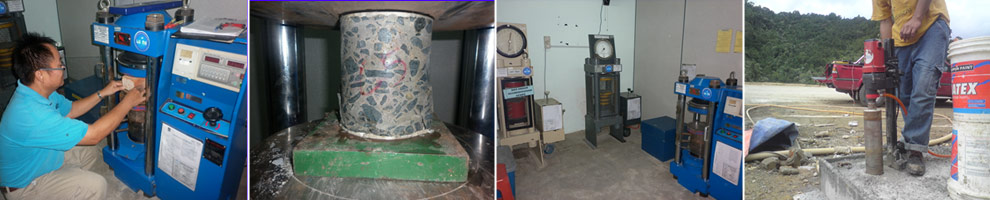
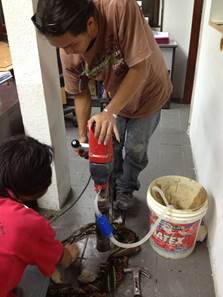
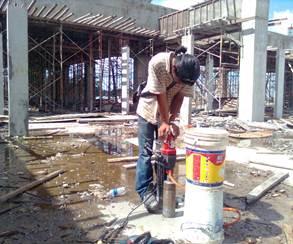
(a) CONCRETE CORING TEST
Condition of concrete in the structure after construction can be assessed directly by core drilling at required location
or at suspected location. The core samples obtained are then taken for visual inspection and compression test to
determine maximum compressive strength.
(b) SLUMP TEST
The concrete slump test is used for the measurement of a property of fresh concrete. The test is an empirical test that
measures the workability of fresh concrete.
(c) CONCRETE CUBE TEST
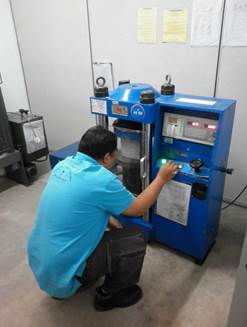
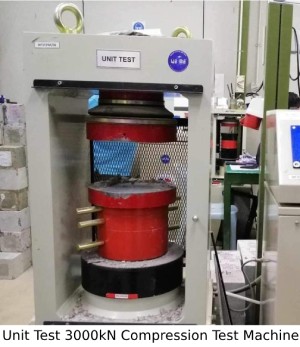
In concrete compression test, normally 150 mm x 150 mm x 150 mm concrete cube
samples is used for testing. Test procedures require specimens are cast in a
number of standard sizes convenient for compressive and flexural strength determination.
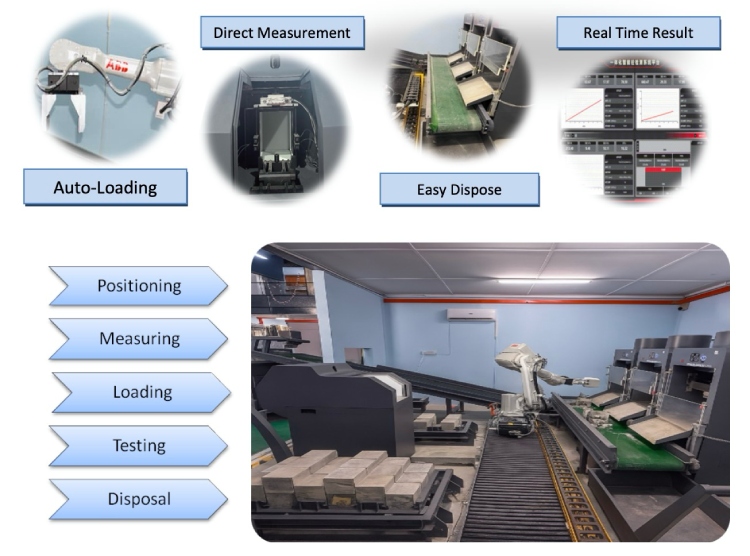
(d) INTELLIGENT CONCRETE TESTING INTEGRATED MACHINE
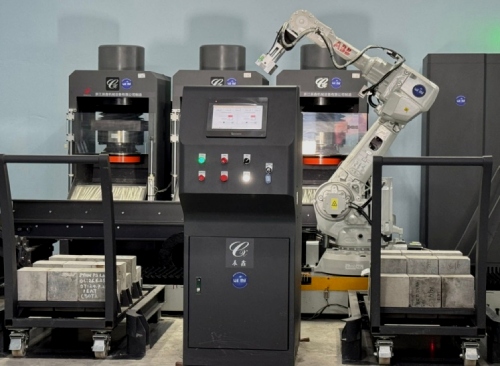
CONCRETE ROBOTIC ARM Compression Testing Machine with Smart Robot Arm System is a new intelligent testing device that offers more flexible, precise test of concrete compressive strength. With the integration of the technology to the conventional testing machine, it improves the test efficiency and reduces human physical burden to carry out the test.
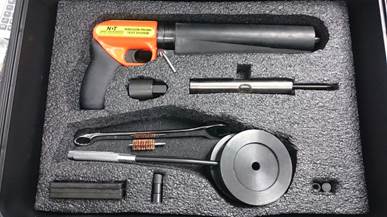
(e) REBOUND HAMMER TEST
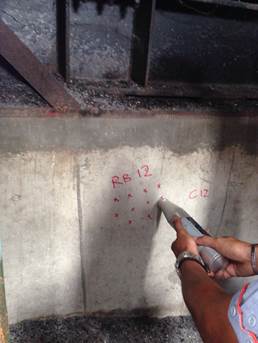
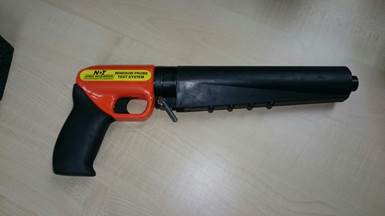
The rebound hammer test is widely known as Schmidt Hammer Test. It is one of the most commonly used non-destructive tests for hardened concrete. The concept of this method is to correlate the surface hardness of the concrete surface to the compressive strength of the concrete.
(f) CONCRETE IMPERMEABILITY TEST BS EN 12390 - 8 : 2009
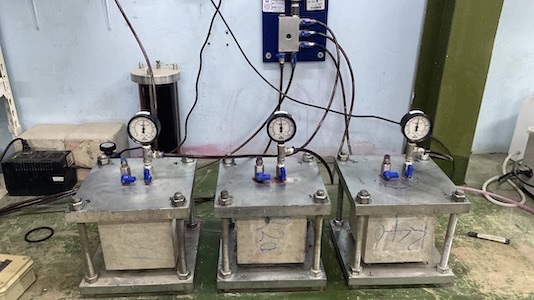 The Water Permeability Test (Depth of Water Penetration under Pressure) subjects a hardened concrete specimen to water pressure of 500 kPa for 72 hours. The specimen is then split and the maximum depth of water penetration is measured. This directly indicates the concrete's impermeability — a critical durability parameter. It’s Conducted as per BS EN 12390-8, this test is specified for basement concrete (P-grade mixes), water-retaining structures, tunnels, swimming pools, dam faces and marine structures.
(g) INITIAL DRYING SHRINKAGE TEST ISO 1920 - : 2009(E)
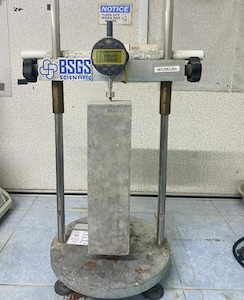
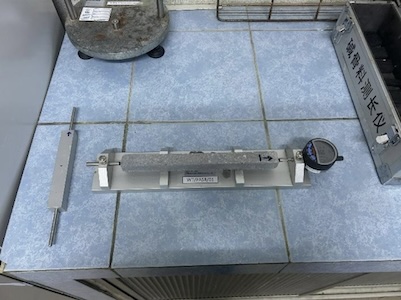
Drying shrinkage is the contraction of a hardened material (most commonly concrete, clay, or textiles) as its internal moisture evaporates. As water leaves the material, capillary tension forces pull the internal structure together, leading to a reduction in overall volume. The initial drying shrinkage test measures the volumetric contraction of hardened concrete or mortar as it loses moisture. It helps prevent structural cracking by determining how different mix designs perform under specific environmental conditions.
(h) AGGREGATE TESTING FOR CONCRETING
Samples of the coarse and fine aggregate shall be tested in accordance with MS 30 and other standards as specified in
Table 9.3 (JKR/SPJ/1988) to ensure their suitability of the aggregate for making the concrete. This tests include Grading
(MS 30), Elongation Index (MS 30), Flakiness Index (MS 30), Water Absorption Test (MS 30), Clay, Silt, Dust Content (MS 30),
Organic Impurities (MS 30), Aggregate Crushing Value (MS 30), Soundness Test (ASTM C88), Chloride Content (BS 812:Part 4) and
Sulphate Content (BS 1377:Test 9).
(i) WATER TESTING FOR CONCRETING
All water for making the concrete shall comply with the requirement of MS 28. This is to ensure the water clean and free from harmful matter.
(j) INITIAL SURFACE ABSORPTION TEST (BS 1881 part 208 : 1996)
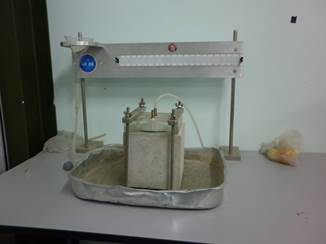
The ISAT was originally developed as a laboratory method of measuring the porosity of concrete. Where carried out on oven dried concrete, the results are reasonably influenced by the existing moisture conditions as well as surface cleanliness. The test consists of the measurement of water flow into the test specimen through a known surface area. The contact area is defined by a plastic cell sealed onto the surface. Measurement of the volume flow is obtained by measurement of the length of flow along a capillary of known dimension. The method may also be used to determine the water absorption of concrete cast into prisms or cylinders where the surface to volume ratio can be calculated and where no point in the specimen is more than 50 mm from a free surface. The measured water absorption of the specimen is corrected to that equivalent to a surface to volume ratio of a core 75 mm long with a diameter of 75 mm.
(k) ELECTRICAL INDICATION OF CONCRETE'S ABILITY TO RESIST CHLORIDE ION PENETRATION ASTM C1202
ASTM C1202 (Standard Test Method for Electrical Indication of Concrete's Ability to Resist Chloride Ion Penetration) is a rapid test used to evaluate a concrete mixture's resistance to chloride ion ingress. It measures electrical current passed through a 100 mm x 50 mm concrete specimen over 6 hours at 60 volts DC. The total charge passed is measured in coulombs and indicates the concrete's permeability level according to the classification given.
(l) POTENTIAL ALKALI REACTIVITY OF AGGREGATES (MORTAR BAR METHOD) ASTM C 1260
Potential Alkali Reactivity of Aggregate provides a means of detecting the potential of an aggregate intended for use in concrete for undergoing alkali-silica reaction resulting in potentially deleterious internal expansion. It is especially useful for aggregates that react slowly or produce expansion late in the reaction. However, it does not evaluate combinations of aggregates with cementations materials nor are the test conditions representative of those encountered by concrete in service. 4.2 Because the specimens are exposed to a NaOH solution, the alkali content of the cement is not a significant factor in affecting expansions.
|